The Light We Carry: The Unspoken Sacrifices of Immigrants

Diwali is often described as the festival of lights—the celebration of hope over despair, knowledge over ignorance, and light over darkness. Across homes and communities, lamps are lit, families gather, sweets are exchanged, and streets glow with colour and warmth.
But this year, I find myself thinking about another kind of light—the quiet light carried by immigrants.
The light that helps someone leave everything familiar behind and begin again.
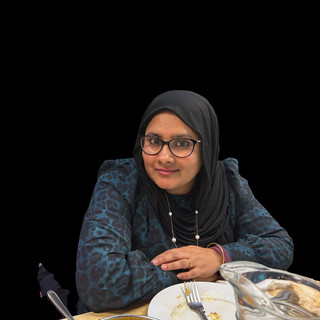
I am a Muslim girl from Chennai, Tamil Nadu, India. My journey to the UK has been shaped by ambition, hope, faith and the desire to build a meaningful life. Like many immigrants, I arrived with dreams of professional growth and a better future, but I soon discovered that settling into a new country is about much more than finding a job or a home.
It is about finding a sense of belonging.
And that can take years.
When people see an immigrant who is professionally established, confidently navigating meetings, leading projects, building a career or contributing to the community, they may not see the story behind that person.
They may not see the countless moments of uncertainty.
They may not see the phone calls home when you miss your family. The festivals are celebrated from thousands of miles away. The celebrations you attend while a part of you wishes your parents, siblings or childhood friends were there. The familiar food that suddenly becomes difficult to find. The language, humour and cultural references that once came naturally but now require explanation.
They may not see the emotional cost of starting again.
The sacrifice of being “strong”
Immigrants often become remarkably good at appearing strong.
We learn to adapt.
We learn new systems, new workplace cultures, new accents, new expectations and new ways of communicating. We learn how to navigate professional environments while simultaneously learning how society works around us.
We celebrate our successes, but we don't always talk about what it took to get there.
Sometimes, the sacrifice is simply being far away.
Sometimes, it is missing a parent growing older.
Sometimes, it is not being there for a wedding, a birthday, a family emergency or an ordinary Sunday lunch.
And sometimes, the greatest sacrifice is invisible: the gradual acceptance that the person we were before immigration and the person we become afterwards may never be exactly the same.
There is grief in that transformation.
But there is also growth.
When “home” becomes two places
One of the most complicated experiences of immigration is discovering that the word home can become beautifully complicated.
Chennai will always hold a part of me.
It holds the sounds, smells, memories and relationships that shaped who I am. It is where my earliest dreams were formed, where my values were nurtured and where I learned the importance of family, community and resilience.
Yet, over time, the UK has also become part of my story.
Here, I have built my professional life in technology and project management. I have grown as a leader, worked with people from different cultures and perspectives, and discovered opportunities to contribute beyond my professional role.
I have also explored coaching, mentoring and advocacy—areas that allow me to support others navigating their own journeys.
Somewhere between Chennai and the UK, I have learned that identity does not always require choosing one place over another.
Sometimes, identity is about carrying both.
The immigrant woman’s invisible balancing act
For many immigrant women, the story becomes even more layered.
There can be expectations from home and expectations from the new country. There can be professional ambitions alongside family responsibilities. There can be pressure to succeed because so much has been invested in the journey.
For women, particularly those balancing careers and family, success can sometimes come with a hidden question:
“How much of yourself did you have to sacrifice to achieve it?”
This is one of the reasons I have become passionate about supporting working women and emerging leaders.
Through my work as a coach, mentor and author, I have seen how many capable women quietly carry enormous responsibilities. They lead teams, manage projects, care for families, support communities and continue to show up—even when they themselves need support.
We often celebrate the finished picture.
We rarely acknowledge the invisible labour behind it.
Bringing our light with us
Immigrants are sometimes expected to integrate, and rightly so—to participate, contribute and become part of the society they now call home.
But integration should not mean erasing where we came from.
Our cultures, languages, traditions, faiths, experiences and perspectives are not obstacles to belonging. They can be contributions to it.
My own experience as a Muslim woman from South India has taught me that diversity is not simply about having different people in the same room. It is about creating spaces where people feel safe enough to bring their whole selves into that room.
This belief has also shaped my interest in diversity, equity and inclusion. Representing UN Women at international platforms such as CSW68 and CSW69 gave me an opportunity to see how personal experiences can connect to much larger conversations about women's empowerment, equality and social change.
Similarly, volunteering to mentor young women through ‘The Girls' Network’ and ‘Muslim Women Connect’ charity groups has reminded me that sometimes, all someone needs is to see another person who believes in their potential.
I'm also a DEI (Diversity, Equity and Inclusion) champion for Family Network and CEN (Culture and Ethnicity Network) at my workplace applying my learnings and also adding new learnings to myself.
That, too, is light.
The light of the immigrant
Perhaps the greatest misconception about immigration is that people simply move countries.
They don't.
They carry memories.
They carry responsibilities.
They carry expectations.
They carry the people they left behind.
And they carry dreams.
Behind every immigrant who appears confident and settled may be a story of countless small sacrifices that nobody witnessed.
A mother who learned to celebrate without her children nearby.
A son or daughter who missed important family moments.
A professional who had to prove themselves all over again.
A young person who learned to navigate two cultures.
A family that started again with very little certainty but enormous hope.
These sacrifices deserve to be acknowledged.
Not with pity—but with respect.
This Diwali, let us notice the lights we don't see
As communities across the UK come together to celebrate Diwali, perhaps we can look beyond the lamps and fireworks and notice another kind of light.
The light carried by the immigrant neighbour who is still learning to feel at home.
The colleague who left their family thousands of miles away.
The parent raising children between cultures.
The woman building a career while carrying expectations from two worlds.
The young person trying to understand where they belong.
And perhaps, most importantly, let us remember that belonging is not something we should have to earn by becoming less of ourselves.
The most beautiful communities are those where different lights do not compete.
They illuminate one another.
My journey from Chennai to the UK has taught me that life is not always about choosing between where we came from and where we are going. Sometimes, it is about allowing both places to shape us.
I still carry Chennai within me.
I carry my faith.
I carry my family.
I carry the lessons of my upbringing.
And I carry the experiences of building a life in the UK.
Together, they form my light.
So, this Diwali, as we light our lamps, perhaps we can spare a thought for those who have travelled far to build a new home.
For the sacrifices they made quietly.
For the courage it took to begin again.
And for the light they bring to the communities they now call home.
Because sometimes, the brightest lights are carried by people who have known the darkness of starting over—and chose to shine anyway.


Comments